


Choosing a Family SUV for the River Valley
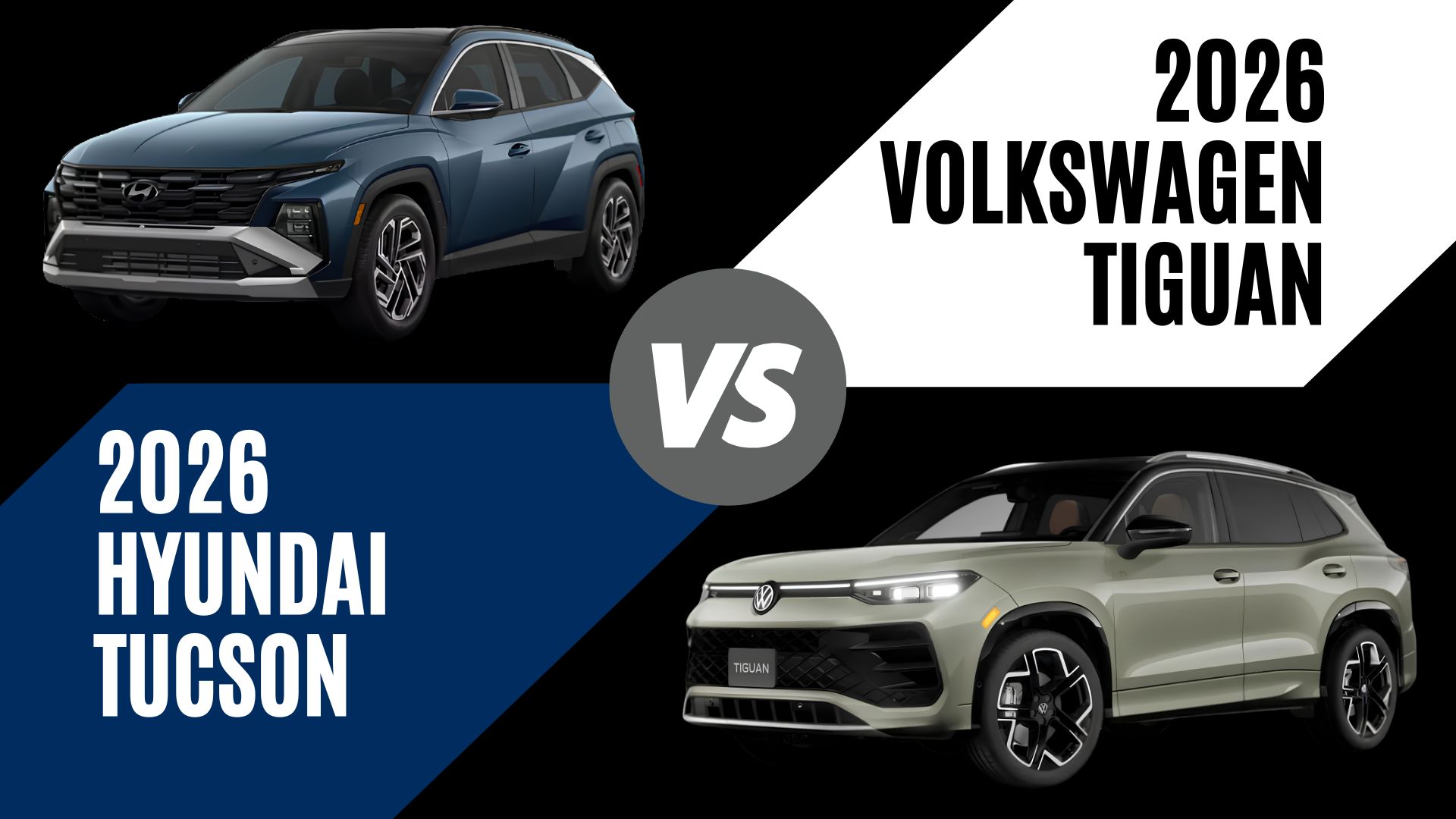
Shoppers across Fort Smith comparing family SUVs quickly land on two strong contenders: the 2026 Hyundai Tucson and the 2026 Volkswagen Tiguan. Both pack real interior space, modern driver-assist features, and available all-wheel drive into a size that works for daily errands and road trips through the River Valley alike. Crain Hyundai of Fort Smith carries the Tucson lineup and put this comparison together to help buyers weigh both options fairly.
Note that this comparison only covers the gas Tucson lineup. Hyundai also builds a Tucson Hybrid and a Tucson Plug-In Hybrid, which will be addressed later.
Vehicle Comparison
2026 Hyundai Tucson

- 12.3-inch Touchscreen
- Hyundai Digital Key 2
- Hyundai SmartSense Safety Suite
2026 Volkswagen Tiguan
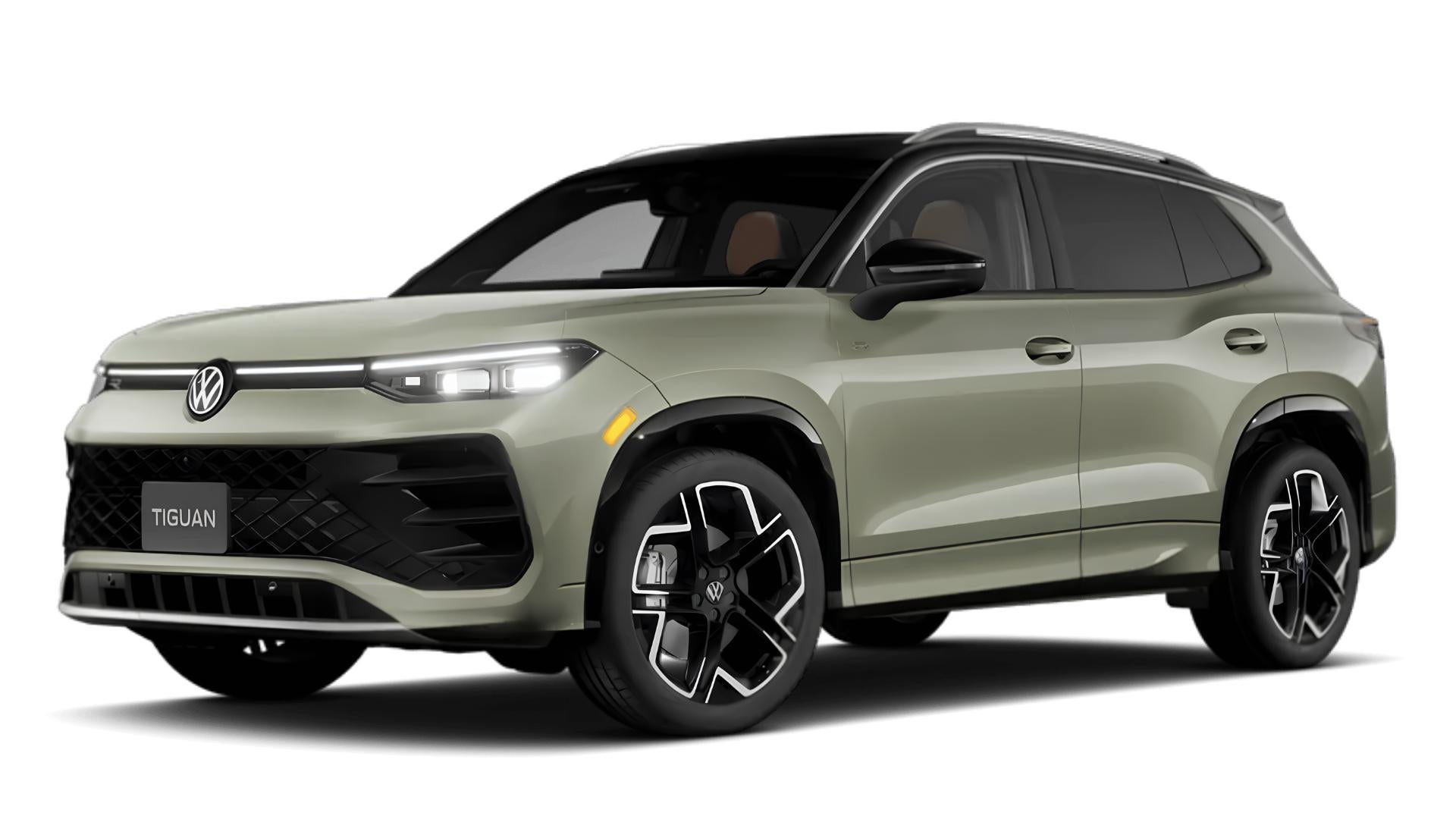
- 12.9-inch Touchscreen
- Standard Adaptive Cruise Control
- IQ.DRIVE Safety Suite
Under the Hood: Two Very Different Engine Strategies
Hyundai keeps things simple with the Tucson, running a single 187-hp 2.5-liter four-cylinder across every gas trim, paired with an eight-speed automatic and optional all-wheel drive. It’s not a quick SUV by class standards, needing roughly 8.8 seconds to hit 60 mph, but that restraint pays off in a notably quiet, settled ride at highway speeds.
Volkswagen goes the opposite direction with the Tiguan, offering a 201-hp turbocharged 2.0-liter on the S, SE, and SE R-Line Black trims, then jumping to a 268-hp version of that same engine on the new 2026 SEL R-Line Turbo, which comes standard with all-wheel drive and reaches 60 mph in just 6.7 seconds.
Engine Breakdown:
- Tucson: 187-hp 2.5L four-cylinder, all gas trims, 8.8-second 0-60
- Tiguan: 201-hp base engine, 268-hp SEL R-Line Turbo, 6.7-second 0-60 (top trim)
- Both: Available all-wheel drive
Fuel Economy Around Fort Smith, Van Buren, and Alma
Daily commuting costs still matter, and both SUVs land in a similar range depending on trim and drivetrain.
Front-wheel-drive Tucson models return 25 mpg in the city and 33 mpg on the highway, for a combined 28 mpg. Choosing all-wheel drive brings that down slightly to 24 mpg in the city and 30 mpg on the highway, for a combined 26 mpg.
The Tiguan’s base engine reaches up to 26 mpg in the city and 34 mpg on the highway with front-wheel drive, dropping to 22 mpg in the city and 30 mpg on the highway once 4Motion all-wheel drive is added. The 268-hp SEL R-Line Turbo comes in a touch lower on the highway at 29 mpg.
Commuter Math:
- Tucson: 28 combined mpg (FWD), 26 combined mpg (AWD)
- Tiguan: Up to 26 city/34 highway mpg (FWD, base engine), 29 highway (SEL R-Line Turbo)
- Both: Reasonable efficiency given their available power
An Electrified Option Within the Tucson Lineup
Buyers who like the Tiguan’s extra power but want to stay within the Hyundai family have another option worth considering. The Tucson Hybrid and Tucson Plug-In Hybrid both deliver quicker acceleration than the standard gas engine while adding electrified efficiency on top of that.
Cabin Style: Clean and Functional vs. Upscale and European
Step inside the Tucson and the layout favors clarity: a digital gauge cluster, column-mounted shifter, and a climate control panel that keeps physical buttons within easy reach rather than burying them in a touchscreen. It’s consistent with the design language Hyundai uses across its current SUV lineup.
The Tiguan’s cabin reads differently, drawing on European design cues and its own column-mounted shifter to open up extra console storage. Move up the trim ladder and options like leather seating and genuine wood trim show up, giving the Tiguan a more premium feel inside.
Cabin Comparison:
- Tucson: Clean, button-forward layout with digital gauge display
- Tiguan: European design cues, available leather and wood trim on upper trims
- Both: Column-mounted shifters that free up console space
Screens and Everyday Tech
Both SUVs lean heavily on touchscreen tech, though they take different approaches to getting there.
A 12.3-inch touchscreen is standard across the Tucson lineup, and SEL Premium and Limited trims pair it with a combined 12.3-inch digital gauge cluster and built-in navigation. Hyundai Digital Key 2 is available on higher trims, letting a paired smartphone unlock, start, and even share access to the vehicle with other drivers.
The Tiguan starts larger, with a standard 12.9-inch touchscreen that can be upgraded to a 15-inch display running Volkswagen’s Digital Cockpit Pro software. Volkswagen kept a rotary volume knob and physical drive-mode controls in place, which some drivers will prefer over a fully touch-based interface.
Screen Specs:
- Tucson: Standard 12.3-inch touchscreen, available digital gauge cluster with nav, Digital Key access
- Tiguan: Standard 12.9-inch touchscreen, available 15-inch display, retained physical rotary controls
- Both: Wireless smartphone connectivity standard
Passenger and Cargo Room
Both SUVs pack a surprising amount of usable space into their footprint, which matters for River Valley families hauling gear as much as passengers.
The Tucson fits 9 carry-on suitcases behind the rear seats, expanding to 22 with the second row folded flat, with a rear seat that feels roomier than several rivals in the class.
The redesigned Tiguan picked up extra length this generation, fitting the same 9 carry-on suitcases behind the rear seats but stretching to 25 with the seats folded, though the previous generation’s optional third row didn’t carry over.
Room to Spare:
- Tucson: 9 suitcases behind rear seats, 22 with seats folded
- Tiguan: 9 suitcases behind rear seats, 25 with seats folded
- Both: Seats five, no third-row option
Driver-Assist and Safety Features
Standard safety tech has become the norm in this class, and both SUVs come well equipped.
Automated emergency braking with pedestrian detection and lane-keeping assist come standard on every Tucson trim, with Hyundai SmartSense unlocking adaptive cruise control and lane-centering higher up the lineup. Highway Driving Assist 2 adds extra ease on longer highway stretches.
The Tiguan matches that with standard adaptive cruise control and lane-centering on every trim, plus automated emergency braking and lane-keeping assist. Ten airbags in total, including driver knee, center, and rear-side airbags, round out its safety hardware.
Safety Rundown:
- Tucson: SmartSense and Highway Driving Assist 2 on select trims
- Tiguan: Standard adaptive cruise control lineup-wide, 10 total airbags
- Both: Standard automated emergency braking and lane-keeping assist
Warranty and Long-Term Ownership
This is where the two brands most clearly separate.
Hyundai’s warranty coverage includes a 5-year/60,000-mile limited warranty, a 10-year/100,000-mile powertrain warranty, and 3 years or 36,000 miles of complimentary scheduled maintenance on the Tucson.
Volkswagen’s coverage on the Tiguan runs shorter: a 4-year/50,000-mile limited and powertrain warranty, plus 2 years or 20,000 miles of complimentary maintenance. It’s solid coverage, but noticeably behind Hyundai’s package.
Warranty at a Glance:
- Tucson: 10-year/100,000-mile powertrain warranty, 3 years complimentary maintenance
- Tiguan: 4-year/50,000-mile powertrain warranty, 2 years complimentary maintenance
- Tucson has the clear long-term coverage advantage
Which SUV Suits Your Fort Smith Driving Needs?
There isn’t a wrong answer here, just different priorities. Drivers who value a settled, quiet ride and want the security of Hyundai’s long powertrain warranty will likely find the Tucson lines up well. Drivers who want more performance on tap, especially with the Tiguan’s 268-hp top trim, or who are drawn to its European cabin character, may prefer the Tiguan instead.
Buyers still narrowing things down can also compare the Tucson against the Honda CR-V or the Nissan Rogue. Either way, families throughout Fort Smith, Van Buren, Alma, and Greenwood have two well-built options to choose between.
FAQs
Q: Which of these two SUVs has more available horsepower?
A: The Tiguan’s top trim, the SEL R-Line Turbo, produces up to 268 horsepower, more than the Tucson’s single 187-hp gas engine option.
Q: How does towing capacity compare between the Tucson and Tiguan?
A: The Tucson can tow up to 2,000 pounds with an optional trailer hitch, giving it a slight edge over the Tiguan’s 1,800-pound towing capacity.
Q: How many airbags come standard on the Tiguan?
A: The Tiguan comes with 10 total airbags, including driver knee, center, and rear side airbags, as part of its standard safety equipment.
Connect with us


Recent Blog Entries
- 2026 Volkswagen Tiguan vs. Hyundai Tucson | Fort Smith, AR
- Why Hyundai Keeps Winning Cars.com’s Top Value Awards
- Hyundai’s 2026 IIHS Awards: A Strong Year for Safety, and What It Means in Fort Smith
- 2026 Hyundai Tucson vs Nissan Rogue in Fort Smith, AR
- 2026 Hyundai Ioniq 5 vs Tesla Model Y in Fort Smith, AR
Categories
Crain Hyundai of Fort Smith
Address
3300 River Valley Drive
Fort Smith, AR 72908
Phone
- Main 479-431-6507
- Service 479-431-6507
- Sales 479-431-6507
| Monday | 8:30AM - 7:00PM |
| Tuesday | 8:30AM - 7:00PM |
| Wednesday | 8:30AM - 7:00PM |
| Thursday | 8:30AM - 7:00PM |
| Friday | 8:30AM - 7:00PM |
| Saturday | 8:30AM - 7:00PM |
| Sunday | Closed |
| Monday | 7:00AM - 6:00PM |
| Tuesday | 7:00AM - 6:00PM |
| Wednesday | 7:00AM - 6:00PM |
| Thursday | 7:00AM - 6:00PM |
| Friday | 7:00AM - 6:00PM |
| Saturday | 7:00AM - 3:00PM |
| Sunday | Closed |
| Monday | 7:00AM - 6:00PM |
| Tuesday | 7:00AM - 6:00PM |
| Wednesday | 7:00AM - 6:00PM |
| Thursday | 7:00AM - 6:00PM |
| Friday | 7:00AM - 6:00PM |
| Saturday | 7:00AM - 3:00PM |
| Sunday | Closed |
