



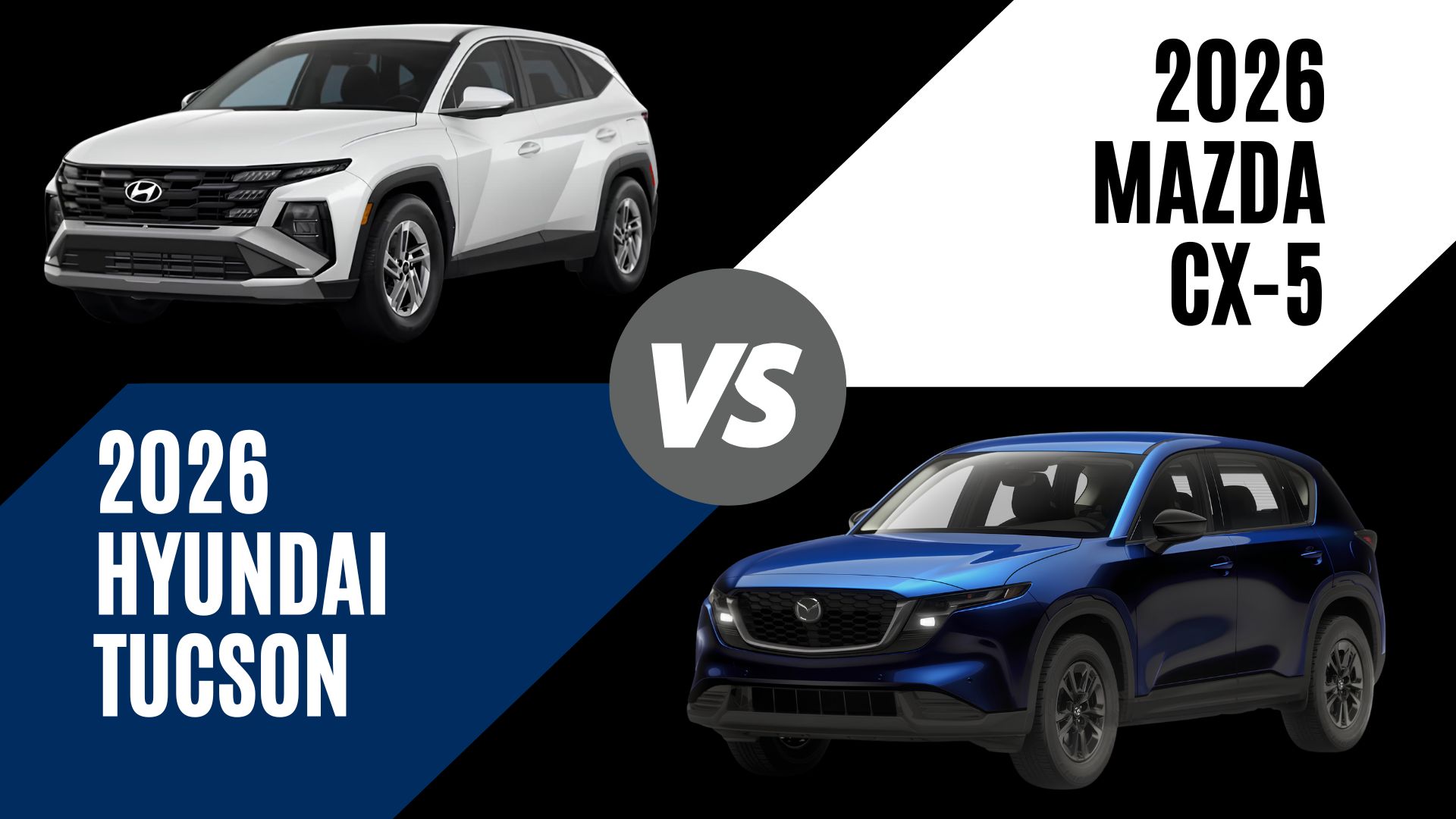
Fort Smith drivers cross-shopping compact SUVs almost always land on the same two names: the 2026 Hyundai Tucson and the 2026 Mazda CX-5. Both share a nearly identical 187-hp four-cylinder engine and roomy rear seating, which makes the real differences come down to how each one actually lives day to day.
That’s where this comparison comes in. Trim-level details for the Tucson are available on the 2026 Hyundai Tucson research page.
Vehicle Comparison
2026 Hyundai Tucson
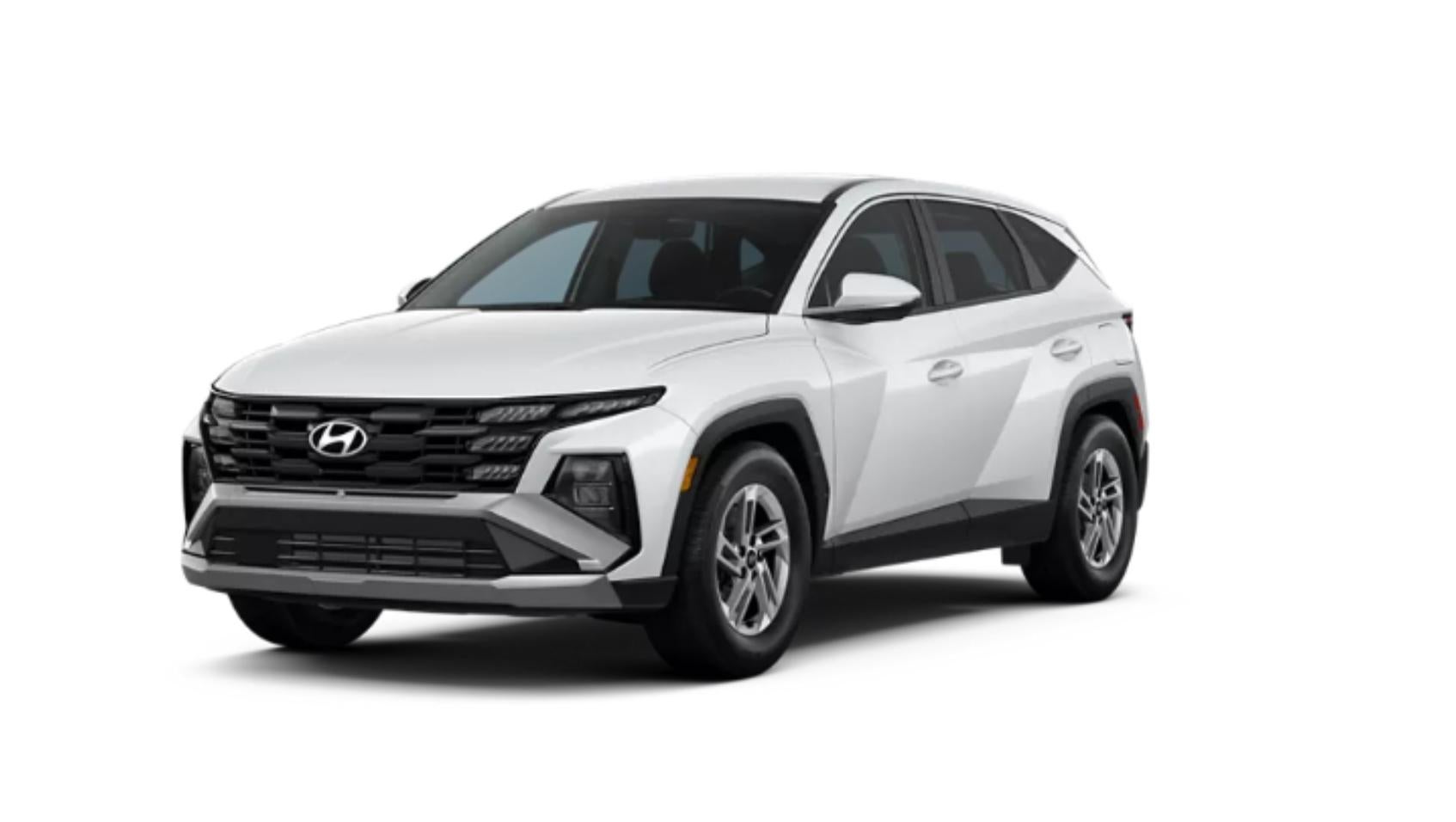
- 12.3″ Touchscreen w/ Wireless CarPlay & Android Auto
- AEB w/ Pedestrian Detection
- Hyundai Digital Key App
2026 Mazda CX-5
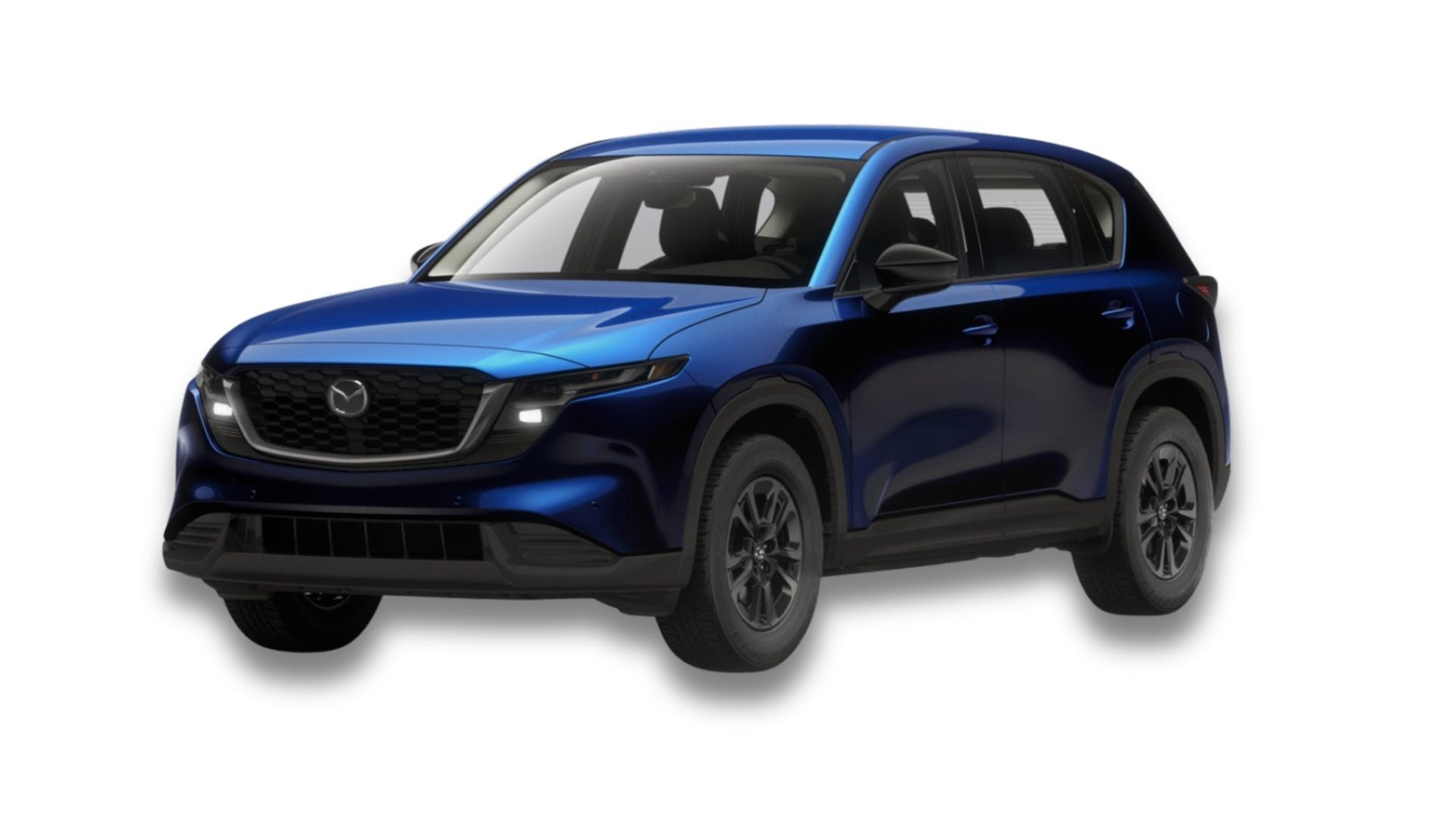
- 12.9″ Touchscreen w/ Google-Based Software
- Lane-Change Assist & Traffic-Sign Recognition
- All-Wheel Drive on Every Trim
Look and Feel
Hyundai gave the Tucson a sharp, angular exterior and carried the same design language found in the brand’s recently updated Palisade, Sonata, and Elantra into its cabin. Mazda took its 2026 CX-5 in a different direction, stretching the wheelbase 4.5 inches and adding seven ambient lighting color choices inside, along with a cleaner dash now that the old console-mounted infotainment knob has been removed.
At First Glance:
- Tucson: sharp, cohesive design shared across Hyundai’s current lineup
- CX-5: freshly stretched proportions with expanded ambient lighting
- Both: interiors that feel a notch above typical compact SUV fare
On the Road
A 187-hp 2.5-liter four-cylinder powers both vehicles, though the delivery method differs. Hyundai pairs the Tucson’s engine with an eight-speed automatic, offering front-wheel drive standard with all-wheel drive available as an upgrade. Mazda uses a six-speed automatic in the CX-5 and makes all-wheel drive standard across the entire lineup, so there’s no front-wheel-drive option to choose from.
Testers found that the CX-5 offers sharper, more responsive handling and reaches 60 mph in 8.0 seconds. The Tucson trades some of that sharpness for a notably quiet, settled cruise, with an all-wheel-drive Limited trim clocking a similar 8.8-second run to 60 mph.
Driving Impressions:
- Tucson: quieter cabin and a smoother ride at highway speed
- CX-5: standard all-wheel drive and slightly sharper handling
- Both: 187-hp engines that prioritize comfort over quickness
Room to Grow
Passenger and cargo space matter for River Valley families, and both SUVs deliver. The Tucson’s rear seat and cargo hold are larger than those of many rivals, fitting 9 carry-on suitcases behind the back row and 22 with the seats folded down, based on real-world testing.
Mazda’s redesigned CX-5 grew significantly for 2026, adding real legroom, kneeroom, and headroom for rear passengers along with a 34-cubic-foot cargo area, though suitcase-count testing hasn’t been published yet for the new generation.
Space Rundown:
- Tucson: proven real-world cargo capacity, verified through testing
- CX-5: larger footprint for 2026 with more rear-seat room
- Both: comfortable seating for five with genuine legroom in back
Screens and Smart Features
A 12.3-inch touchscreen comes standard on the Tucson, with an optional dual-screen display that spans much of the dashboard for gauges and infotainment side by side. Every Tucson trim includes wireless Apple CarPlay and Android Auto, and Hyundai’s Digital Key technology lets a compatible smartphone unlock and start the vehicle without a physical key.
Mazda equips the CX-5 with a standard 12.9-inch touchscreen, stepping up to an available 15.6-inch Google-based display on higher trims. Wireless smartphone connectivity, however, is limited to the Select trim and above, and early testers reported occasional glitches with the redesigned system.
Tech Check:
- Tucson: wireless connectivity standard on every trim, plus Digital Key access
- CX-5: larger screen available, but wireless features and glitch-free performance depend on trim level
- Tucson offers more consistent tech regardless of which trim you choose
Protection Built In
Standard driver-assistance technology runs deep on both SUVs. The Tucson includes automated emergency braking with pedestrian detection and lane-departure warning with lane-keeping assist as standard equipment, with adaptive cruise control and lane-centering available on higher trims.
The CX-5 answers with its own standard suite, including automated emergency braking, lane-keeping assist, adaptive cruise control, lane-change assist, and traffic-sign recognition. Fort Smith drivers can see how Hyundai’s safety record measures up in the brand’s most recent industry recognition.
Safety Highlights:
- Tucson: pedestrian detection built into standard automated braking
- CX-5: standard lane-change assist and traffic-sign recognition
- Both: standard automated emergency braking, lane-keeping assist, and adaptive cruise control
Power, Efficiency, and Towing
Front-wheel-drive Tucson models return an EPA-estimated 25 mpg city and 33 mpg highway, dropping to 24 mpg city and 30 mpg highway with all-wheel drive. Towing capacity reaches 2,000 pounds with an optional hitch. The CX-5, with its standard all-wheel-drive setup, is rated at 24 mpg city and 30 mpg highway, with towing capped at 1,500 pounds.
Between the two, the Tucson’s front-wheel-drive fuel economy numbers and higher towing ceiling give it a practical advantage for River Valley drivers hauling small trailers or gear.
Hybrid and Plug-In Alternatives
The figures above reflect the gas-only Tucson and CX-5, so no hybrid or plug-in numbers are included. Hyundai’s lineup already includes a Tucson Hybrid and Tucson Plug-In Hybrid for buyers who want more efficiency without giving up capability, part of a broader hybrid and EV push that’s earned recent recognition. Mazda has a CX-5 Hybrid planned, but it isn’t expected until the 2027 model year, so it falls outside this comparison.
Warranty and Peace of Mind
Hyundai covers the Tucson with a five-year, 60,000-mile limited warranty, a ten-year, 100,000-mile powertrain warranty, and three years or 36,000 miles of complimentary scheduled maintenance. The CX-5’s coverage from Mazda is considerably shorter: a three-year, 36,000-mile limited warranty, a five-year, 60,000-mile powertrain warranty, and no complimentary maintenance included. Fort Smith drivers can review the full details in Hyundai’s warranty coverage.
Warranty Breakdown:
- Tucson: doubles the CX-5’s powertrain coverage, plus included maintenance
- CX-5: shorter coverage across the board, with no maintenance program
- Tucson’s ownership costs stay lower over the long run
The Verdict for Fort Smith Drivers
Both the Tucson and CX-5 hold their own in the compact SUV class, but the Tucson’s advantages add up where it counts most: better fuel economy, stronger towing capacity, consistent wireless tech across every trim, and a warranty program that’s hard to beat.
Fort Smith drivers looking for a compact SUV that delivers dependable long-term value should make the Tucson their first stop. Visit Crain Hyundai of Fort Smith to see the current inventory and financing options in person.
FAQs
Does the Tucson come with front-wheel drive, or is all-wheel drive required?
Front-wheel drive is standard on the Tucson, with all-wheel drive available as an upgrade, unlike the CX-5, which comes standard with all-wheel drive across every trim.
Which SUV offers a quieter ride for daily driving around Fort Smith?
The Tucson is tuned for a notably quiet, settled cruise, while the CX-5 leans toward sharper, more responsive handling.
What driver-assistance features come standard on the Tucson compared to the CX-5?
Both include standard automated emergency braking, lane-keeping assist, and adaptive cruise control, though the Tucson adds standard pedestrian detection and the CX-5 adds standard lane-change assist and traffic-sign recognition.
Connect with us


Recent Blog Entries
- 2026 Hyundai Tucson vs 2026 Mazda CX-5: A Compact SUV Comparison for Fort Smith Drivers
- 2026 Volkswagen Tiguan vs. Hyundai Tucson | Fort Smith, AR
- Why Hyundai Keeps Winning Cars.com’s Top Value Awards
- Hyundai’s 2026 IIHS Awards: A Strong Year for Safety, and What It Means in Fort Smith
- 2026 Hyundai Tucson vs Nissan Rogue in Fort Smith, AR
Categories
Crain Hyundai of Fort Smith
Address
3300 River Valley Drive
Fort Smith, AR 72908
Phone
- Main 479-431-6507
- Service 479-431-6507
- Sales 479-431-6507
| Monday | 8:30AM - 7:00PM |
| Tuesday | 8:30AM - 7:00PM |
| Wednesday | 8:30AM - 7:00PM |
| Thursday | 8:30AM - 7:00PM |
| Friday | 8:30AM - 7:00PM |
| Saturday | 8:30AM - 7:00PM |
| Sunday | Closed |
| Monday | 7:00AM - 6:00PM |
| Tuesday | 7:00AM - 6:00PM |
| Wednesday | 7:00AM - 6:00PM |
| Thursday | 7:00AM - 6:00PM |
| Friday | 7:00AM - 6:00PM |
| Saturday | 7:00AM - 3:00PM |
| Sunday | Closed |
| Monday | 7:00AM - 6:00PM |
| Tuesday | 7:00AM - 6:00PM |
| Wednesday | 7:00AM - 6:00PM |
| Thursday | 7:00AM - 6:00PM |
| Friday | 7:00AM - 6:00PM |
| Saturday | 7:00AM - 3:00PM |
| Sunday | Closed |
