Blog / Fort Smith Hyundai Service

4 Reasons to Regularly Get Your Tires Rotated

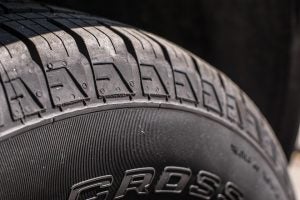
Close view of a tire. | Hyundai service center in Fort Smith, AR.
Tires are made from polyester bands with a steel band in the middle and they're covered in thick rubber. The bands give the rubber strength and durability. Despite their reinforcement, your tires can still wear and regular tire rotation is important to extend the lifespan of your tires. When it's time to have your tires changed around, as your Hyundai dealer we can do it for you. These are some of the reasons why regular rotation is important.  

Increased Fuel Economy

Tire treads are carefully designed to reduce the resistance your tires face when you drive. Unevenly worn tires create more resistance when your tires travel over any surface. This increased resistance means your engine has to work harder than it should to overcome that resistance, and that means burning more gas. When your tires are regularly rotated, they maintain a more even wear pattern. This even wear reduces surface resistance and also reduces the demands on your engine. You'll save wear and tear on engine components too as your engine doesn't have to work as hard.

Better Handling

Your tread helps to keep your car stable, especially when it drives over uneven surfaces, wet roads, or snow. The tread patterns are designed to keep as much of your tire in contact with the surface as possible. If your tires aren't regularly rotated, the tire treads wear unevenly.  The reduced depth of the groove means that liquid isn't easily or evenly displaced and this causes vibrations. Regularly rotated tires show a more even wear on the tread which allows for maintaining better contact with the surface. It also prevents your car from pulling to one side due to more wear on the tires on one side of your car than the other.

Improved Tire Life

Good tires can be expensive, and it makes good economic sense to prevent replacing them for as long as possible. If your tires are not rotated, they can take quite a beating. Your front ties, for example, carry more weight than the rear tires as more than 60% of a car's weight is in the front. By rotating tires between the front and the rear, you help to reduce the damage done to them by carrying extra weight. Tires wear down at different rates depending on their position. By rotating your tires you allow each tire to wear evenly.

Rotation is Fast and Affordable

Rotating your tires is very affordable, and it pays for itself very quickly. You save money by saving fuel and reducing the chance of costly damage to your axles and other components. Our technicians are highly experienced and we have the best equipment available to speedily rotate your tires. We advise that your tires be rotated every six months. When you're in Fort Smith, call our service department at Crain Hyundai of Fort Smith. Our technicians will rotate your tires while you enjoy a great coffee in our waiting room. Image via Pixabay. .

Posted in:

Related Posts

Interior view of the steering wheel and dashboard area in a 2023 Hyundai Sonata. | Hyundai dealer in Fort Smith, AR | Crain Hyundai of Fort Smith

Ask the Hyundai Dealer: 4 Common Signs of a Faulty Ignition Coil

The ignition coil, an essential component in your Hyundai's ignition system, is responsible for transforming low voltage from the battery into high voltage required to generate a spark for igniting the air-fuel mixture in the combustion chamber. Visiting a Hyundai dealer for diagnosis and repairs is crucial as they have specialized knowledge, ensuring accurate identification of the faulty ignition coil and reliable repairs tailored specifically to your vehicle. 1. A Loss of Power If you notice a significant loss of power in your vehicle, it could be a sign of a defective ignition coil. When the coil is faulty, it may fail to deliver a strong spark, resulting in poor engine performance. You may experience sluggish acceleration, difficulty climbing hills, or a general lack of power. If you start to experience these symptoms, it's best to have your ignition coil checked by a qualified mechanic to regain optimal engine function. 2. Your Check Engine Light Is On One of the common indicators of a defective ignition coil is the illumination of the check engine light on your dashboard. The check engine light serves as a warning system that detects various issues with your vehicle's components, including the ignition system. When the ignition coil is malfunctioning, it can trigger the check engine light. Ignoring this warning can lead to further engine damage or decreased fuel efficiency. It's important to have your vehicle's diagnostic system scanned to retrieve error codes and pinpoint the specific issue. A professional mechanic can then diagnose the problem and recommend the necessary repairs to resolve the ignition coil issue. 3. Your Fuel Economy Decreases A damaged ignition coil can contribute to poor fuel economy in your vehicle. When the coil is faulty, it can lead to incomplete combustion or misfires, resulting in inefficient fuel consumption. You may notice that you are visiting the gas station more frequently than usual and that your vehicle's fuel efficiency has significantly decreased. 4. Misfiring Engine When an engine misfires, it means that one or more cylinders fail to ignite the air-fuel mixture properly. This can result in a rough-running engine, noticeable vibrations, and a lack of smooth power delivery. A damaged ignition coil can cause inconsistent or weak sparks, leading to misfires. If you experience frequent engine misfires, it's crucial to have your ignition coil checked. Ignoring this issue can lead to further damage to the engine components, such as the spark plugs or catalytic converter. Potential causes of a defective ignition coil include electrical faults, wear and tear over time, exposure to extreme temperatures, or moisture intrusion, which can all lead to compromised performance and eventual failure. If you've experienced any of the above-named issues, don't hesitate to reach out to us. Send us a message at Crain Hyundai of Fort Smith to book your diagnostic appointment with our experienced team.

Rear profile view of a gray 2023 Hyundai Sonata. | Hyundai dealer in Fort Smith, AR | Crain Hyundai of Fort Smith

Signs You Need New Spark Plugs From Your Hyundai Dealer

A vital component in your vehicle's engine system is the spark plug, and detecting early signs that your Hyundai needs new spark plugs can enhance performance, save you on fuel consumption, and prevent more serious problems down the road. Talk to a Hyundai dealer if you notice any of the following signs. Decreased Fuel Efficiency One of the first telltale signs that your Hyundai might require new plugs is a decrease in fuel efficiency. These plugs play an instrumental role in combusting the fuel in your engine, so if they are malfunctioning, your car may consume more fuel than necessary. If you notice you're visiting the gas station more frequently, it's time to consider having your plugs checked. Difficulty Starting the Vehicle These plugs are key to starting your Hyundai. They ignite the air-fuel mixture in the engine's combustion chamber, enabling your vehicle to start. If your Hyundai struggles to start, or you're experiencing more instances of your car failing to turn over, it may be a sign that your plugs need replacement. Poor Acceleration and Rough Idling The state of your plugs can impact your Hyundai's overall performance. If you're experiencing sluggish acceleration or your vehicle seems less responsive when you hit the gas pedal, it may be due to worn plugs. Additionally, a rough idle – where your Hyundai feels shaky and produces a loud, irregular noise while stationary – can also point to spark plug issues. Misfires and Engine Surges Finally, engine misfires or surges are significant indicators of spark plug failure. If your engine is not running smoothly or if it surges and falls repeatedly, it can be due to malfunctioning plugs. This erratic operation can lead to larger issues if not addressed promptly. How a Spark Plug Works A spark plug sends an electrical signal sent from the ignition coil, creating a spark that ignites the air-fuel mixture in the combustion chamber. This is what powers your engine and propels your vehicle forward. The electrodes on a spark plug are subjected to extreme conditions, and over time, they wear out. This deterioration is what leads to many of the symptoms previously described, such as decreased fuel efficiency, difficulty starting, poor acceleration, rough idling, and engine misfires or surges. At Crain Hyundai of Fort Smith, we understand the importance of proactive maintenance, and our team of experienced technicians is ready to help. If you suspect your Hyundai needs new plugs, don't wait until your vehicle's performance suffers. Reach out to Crain Hyundai of Fort Smith today and let's ensure your Hyundai continues to deliver the performance and efficiency you've come to expect.

Front view of a parked 2023 Hyundai Santa Cruz with the headlights on. | Hyundai dealer in Fort Smith, AR | Crain Hyundai of fort Smith

3 Electrical Problems You Should Always Fix at Your Hyundai Dealer

Electrical problems can vary from minor to major, but they all affect your ability to enjoy the benefits of your Hyundai. If a problem isn't repaired, it could lead to extensive damage to your car. Fortunately, your Hyundai dealer in Fort Smith, AR, can fix any possible problem for you. These are a few potential issues that mean you need to visit us for a repair. Worn Alternator The alternator is a small generator inside your engine that produces electricity for your car's systems and devices while your engine is running. Some of the electricity it produces is used to recharge your battery. An alternator has an average lifespan of eight years before it needs replacement. Eventually, the alternator will slow down due to age wear, and this reduces the amount of power it produces. A failing alternator isn't usually noticeable when it starts, as the alternator produces more power than your car's systems require. As time passes, the reduced power supply from the alternator will cause problems for your car including misfiring, slower starting, and dim lights. The battery warning light on your dash will also illuminate. We can test your alternator and install a new one very quickly if required. Damaged Fuse Box Every electrical system in your car has a fuse. These fuses function identically to the ones in your home, as they protect their connected systems against electrical overloads and shorts. Fuses age and wear out, and they can also blow due to electrical shorts. The blown fuse prevents a short from damaging its system but also cuts power to that system until the fuse is replaced. If you're experiencing multiple blown fuses, the problem is very likely due to a damaged fuse box. Our technicians will test the fuse box and the wiring connected to it to find and isolate the problem. We can replace damaged wiring and fuses and will also install a new fuse box if it is causing the problem. Once the fuses are reconnected, your car's electrical system will work correctly again. Damaged Spark Plugs Healthy spark plugs are essential for efficient combustion, as they provide the ignition source for the fuel-air mixture in the cylinders. The spark plugs are supplied with power from the electrical system. Spark plugs will wear out in time, and we test and replace them as part of your car's service schedule. Plugs can also be damaged by the failure of other engine components, like a worn ignition coil or a fuel-rich engine. Damaged plugs will cause misfiring and could prevent your engine from starting. Our technicians will test each spark plug and replace any damaged ones. Problems in the electrical system can cause additional damage to your car and its systems. Call us today at Crain Hyundai of Fort Smith.